

Built for what works — not what headlines.
Rethink Trafficking exists to help communities respond to trafficking and exploitation with strategies that are reality-based, survivor-informed, and effective in the real world—not just compelling on paper.
Why we were founded
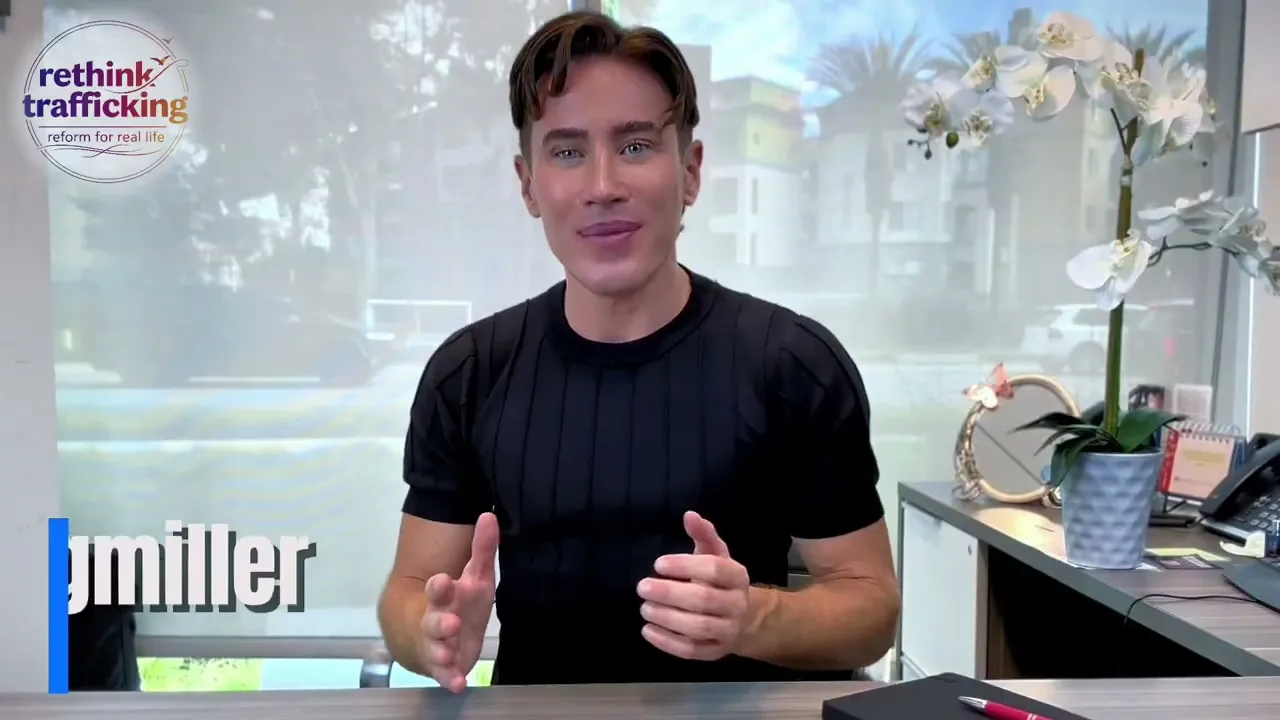
This work is personal. Our founder, West Seegmiller, was working in public health and community organizing when he lost his younger sister while she was experiencing a trafficking situation. That loss became a turning point: a decision to pivot from general community work into a focused mission—helping prevent exploitation before it escalates, and strengthening the systems people rely on when it does.
Over time, one truth kept showing up: even well-intended programs can miss the mark. Policies designed to “help” can unintentionally increase harm, push people further underground, or prioritize what feels good to donors and plays well in media—rather than what actually improves safety, stability, and exit options.
Rethink Trafficking was built to close that gap.
Our approach
We bring a grounded, systems-level lens to a problem that’s often oversimplified. Our work is guided by a few principles:
Survivor voices first. People closest to exploitation understand what supports help—and what harms.
Evidence over assumptions. We test ideas against outcomes, not narratives.
Harm reduction + prevention. Safety and stability are not rewards; they are starting points.
Cross-sector collaboration. Real solutions involve service providers, public health, researchers, advocates, and yes—sometimes government partners.
Credibility matters. We help organizations communicate responsibly and accurately, without sensationalism..
About our founder
West Seegmiller is a public health–informed community organizer, policy researcher, and anti-trafficking strategist with deep experience at the intersection of trafficking response, sex trade policy, and survivor-centered systems design.
His work spans frontline outreach, research institutions, hospital advisory leadership, and large-scale program development—always with the same focus: what actually reduces harm and expands real options for people experiencing exploitation.
Relevant experience includes:
Advocacy
Collaborated with major anti-trafficking organizations, including the Coalition to Abolish Slavery and Trafficking (CAST), and initiated targeted campaigns focused on men and boys at risk of trafficking.
Served in long-term leadership at a sex work support nonprofit (Policy Director → Co-Director), helping grow the organization from early pre-501(c)(3) stages into a stable operation with roughly a $250,000 annual budget.
Served as a leader within the transgender community in Los Angeles, including board service on St. John’s Hospital’s Trans Advisory Board, elevating trafficking and exploitation risks affecting trans communities.
Participated in the MeToo LA steering committee, supporting accountability efforts and survivor-centered advocacy.
Worked alongside survivors connected to the Ed Buck serial predator case, contributing to advocacy and support efforts around an unusually high-profile pattern of abuse and impunity.
Research
Worked as a policy researcher with UCLA-affiliated research initiatives, analyzing the real-world impacts of legislation intended to reduce violence for people in the sex trade.
Conducted research on men in the sex trade and the social determinants of health that drive vulnerability.
Co-initiated (with partners) the Sex Work Lived Experience Affirming Research Network—a multi-institute consortium designed to bridge the gap between people directly impacted by research and the institutions producing it, strengthening ethics, relevance, and real-world applicability.
Impact
Delivered 200+ speaking engagements and workshops translating research and lived experience into practical training, policy insight, and survivor-centered best practices.
Published journalism in national outlets on issues including the safety of immigrants at risk of exploitation.
Supported a cross-agency public health initiative with the LA County Department of Public Health and the Office of Immigrant Affairs to launch a massage parlor outreach pilot—prioritizing culturally competent support and outreach as a first line of defense rather than punitive raids; the model was later adopted countywide.
Drafted and passed a similar massage outreach initiative in West Hollywood, bringing the same prevention-first, non-punitive framework into local policy.
The takeaway
Across these roles, West’s assumptions were challenged—by survivors of both labor and sex trafficking, by frontline realities, and by the difference between policies that sound good and strategies that work. That lived learning is the foundation of Rethink Trafficking: bridge the gap between intention and impact, and help communities implement responses that are ethical, practical, and effective.
If you’re here, you’re already doing the hard part.
If you’re looking for help with education, program design, research support, campaigns, or cross-sector strategy—tell us what you’re exploring. We’ll help you move forward with clarity and credibility.

Get Involved!
Have a question, a project idea, or a situation you’re trying to make sense of? Reach out. We’ll point you toward next steps—whether that’s training, consulting, collaboration, or the right support.