
December 17: Sex Worker Safety as Trafficking Prevention
Dec 18, 2025
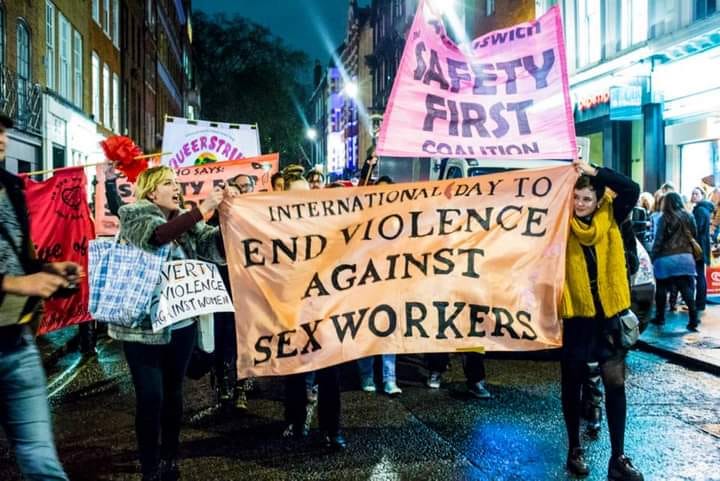
December 17 isn’t a branding opportunity. It’s a memorial.
The International Day to End Violence Against Sex Workers began as a vigil—an insistence that people who sell sex are not disposable, not “less dead,” not the kind of victim the public shrugs at. NSWP+1 And in Orange County, we should sit with that discomfort, because it points straight at a policy truth we’ve spent years dodging:
You cannot build effective anti-trafficking systems while refusing to talk honestly about adult consensual sex work.
Not because everyone has to agree on ideology. Because violence thrives where stigma is operational—where reporting a crime risks arrest, deportation, humiliation, or having your life turned into evidence.
And OC is not immune. The Orange County Grand Jury has described OC as a high-demand area for sex trafficking, citing affluence, tourism, and convention industries, and calling out the need for consistent funding and better systems for tracking traffickers and victims. Anaheim Official Website Recent local reporting on Orange County Human Trafficking Task Force data also shows hundreds of identified victims served—and emphasizes that official figures are only a “thin slice” of the problem. Waymakers
If we’re serious about prevention, we have to get serious about rights-based safety.
My bias was real. Then the field corrected me.
I began my career opposing decriminalization, informed by second-wave feminist thinkers I admired and the ideological ecosystem I was steeped in. On paper, it was tidy: sex work was violence, full stop; anything that sounded like “normalizing” it felt like complicity.
Then reality showed up.
Through my work in anti-trafficking at CAST LA (Coalition to Abolish Slavery and Trafficking), and through becoming socially embedded in a sex worker community, I started seeing the gap between what we say we’re doing and what people experience when we do it. I began organizing with SWOPLA, first as Political Director and later as Co-Director for years. And I watched—up close—the hesitation and resentment that moralizing trafficking-response models created among the very population we claimed to be protecting.
From an anti-trafficking background, I started seeing my role at SWOPLA as a bridge between two worlds: one world rightly horrified by coercion and exploitation, the other world exhausted by being treated like a problem to be erased rather than people to be kept alive.
The good news? Policy research began catching up to what many people in the community already knew: criminalization and stigma don’t protect people—they isolate them.
So we helped initiate a research effort with UCLA partners connected to the Sex Work Lived Experience Affirming Research Network and related UCLA-based public health work examining how policy changes affect safety behaviors and crime reporting. UCLA’s SB 233 study site lists SWOP-LA among community partners in designing and implementing the research. UCLA HHIPP+1
Evidence over ideology: three models, one goal—less violence
Here’s the adult truth: there is no magic policy model. Each approach has tradeoffs. Outcomes depend on implementation, labor protections, stigma, enforcement culture, and whether the system is designed with real-world safety in mind.
But the evidence does give us a baseline.
1) Criminalization (of workers, clients, or both): the baseline harm.
Public health research has repeatedly linked criminalization to increased vulnerability to violence and reduced ability to negotiate safety and access services. The 2015 Lancet action agenda noted that laws against consensual adult sex work impede prevention and enable harassment and violence, undermining health and safety. The National LGBTQ+ Bar Association+1
2) “End-demand” (client criminalization): intended protection, real-world tradeoffs.
This model claims to target buyers, not workers—but the lived impact often lands on workers through displacement, rushed screening, and intensified policing around visible street economies. A BMJ Open qualitative study in Canada found that policing and criminalization of clients shaped working conditions in ways that reproduced vulnerabilities to violence and poor health. BMJ Open+1
Does that mean every end-demand framework is identical? No. But it means OC should stop pretending intention equals outcome.
3) Legalization / heavy regulation: “protection” that can become surveillance and exclusion.
Germany’s regulatory framework (including the 2017 Prostitute Protection Act) has been debated partly because compliance-heavy systems can push people into a two-tier reality: those who can register and comply, and those who avoid registration due to stigma or immigration fears—leaving the most marginalized outside protections. The European Commission notes Germany’s law requires an evaluation report to be submitted to Parliament by 2025. Migration and Home Affairs+1
This is exactly why we should be cautious about pretending “legalization” automatically equals safety.
Decriminalization is not a religion either.
Even where decriminalization is associated with improved safety and health access, it still requires labor rights, anti-coercion enforcement, and resourced services. New Zealand’s Prostitution Law Review Committee report found many workers reported being more able to refuse clients after reform—yet also documented ongoing problems that law alone doesn’t solve. English Collective of Prostitutes+1
So no: I’m not asking OC to copy-paste a slogan from another country.
I’m asking OC to copy outcomes: less violence, more reporting, more real access to help.
California already gave us a pragmatic lever: SB 233
California’s SB 233 (effective January 2020) is a harm-reduction example that does not require everyone to “settle” the philosophical war first.
SB 233 was designed to reduce barriers to reporting violence by providing that a person who reports being a victim or witness to specified violent crimes shall not be arrested for certain prostitution-related offenses and certain misdemeanor drug offenses when related to the crime being reported, and it also limits the use of condoms (and certain HIV prevention items) as evidence in sex-work-related enforcement contexts. Senate Public Safety Committee+2LegiScan+2
That’s the principle: reporting violence should not be a trapdoor into punishment.
But here’s the implementation problem—again, the field correcting our fantasies. UCLA’s Williams Institute reported that many sex workers did not know about key SB 233 protections, including that condoms can’t be used as evidence for arrest or prosecution for sex work. Williams Institute+1
A right you don’t know you have isn’t a right—it’s a footnote.
The trust gap is real—and sex worker–led groups have been filling it
Groups like DecrimSexWorkCA are explicitly sex worker–led and organized around safety, mutual care, and leadership-building. DecrimSexWorkCA+1
SWOP Behind Bars focuses on incarcerated and re-entering sex workers and trafficking survivors, offering direct support and services and centering lived experience. Swop Behind Bars+1
And SWOP-USA describes itself as a national network with chapters across the U.S. swopusa.org+1
Here’s the uncomfortable part for the anti-trafficking world: many of these groups understandably experience “anti-trafficking” efforts as antagonistic to their dignity and safety—because too many anti-trafficking systems still default to moralizing narratives and conflation (treating all sex work as trafficking, regardless of consent). Freedom Network USA has been unusually clear about that harm, publishing rights-based resources that explicitly warn against conflating sex work and trafficking and emphasize sex worker rights as a trafficking-prevention strategy. Freedom Network USA+2Freedom Network USA+2
We should take that seriously—not as an insult, but as a diagnostic.
When a community avoids your services, it doesn’t mean the community is “in denial.”
It often means your system feels unsafe.
A rights-based Orange County call to action
On this December 17, honoring the dead has to include protecting the living.
Orange County doesn’t need another awareness month graphic. OC needs a rights-based minimum standard for anti-trafficking work—one that acknowledges reality, reduces stigma, and measurably increases safety.
Here’s what that looks like, practically:
Adopt a “violence-first” reporting posture: build protocols so people can report rape, assault, extortion, stalking, trafficking, and coercion without fear of being arrested or humiliated—aligned with the harm-reduction logic of SB 233. Senate Public Safety Committee+1
Fund and formalize partnerships with sex worker–led organizations as safety infrastructure (not as a controversial add-on). DecrimSexWorkCA+2Swop Behind Bars+2
Stop measuring success by arrests. Measure: increased reporting, increased service linkage, reduced violence, increased language-access uptake, and improved trust indicators.
Train providers and systems on conflation harms: incorporate rights-based training and policy guidance like those advanced by Freedom Network USA—less moral panic, more precision. Freedom Network USA+1
Commit to regional appropriateness: don’t copy-paste Sweden, Germany, or New Zealand. Study what improves outcomes, acknowledge tradeoffs, and build OC’s model around evidence, enforcement culture, and local community realities. BMJ Open+2Migration and Home Affairs+2
That’s the point of December 17.
Not to win an argument—but to reduce the number of names we have to read next year.
If Orange County wants to fight trafficking, it has to stop treating sex worker rights as a distraction—and start treating them as a core prevention strategy.

Get Involved!
Have a question, a project idea, or a situation you’re trying to make sense of? Reach out. We’ll point you toward next steps—whether that’s training, consulting, collaboration, or the right support.