
OCHTTF 2025 Report Analysis: Survivor Leadership
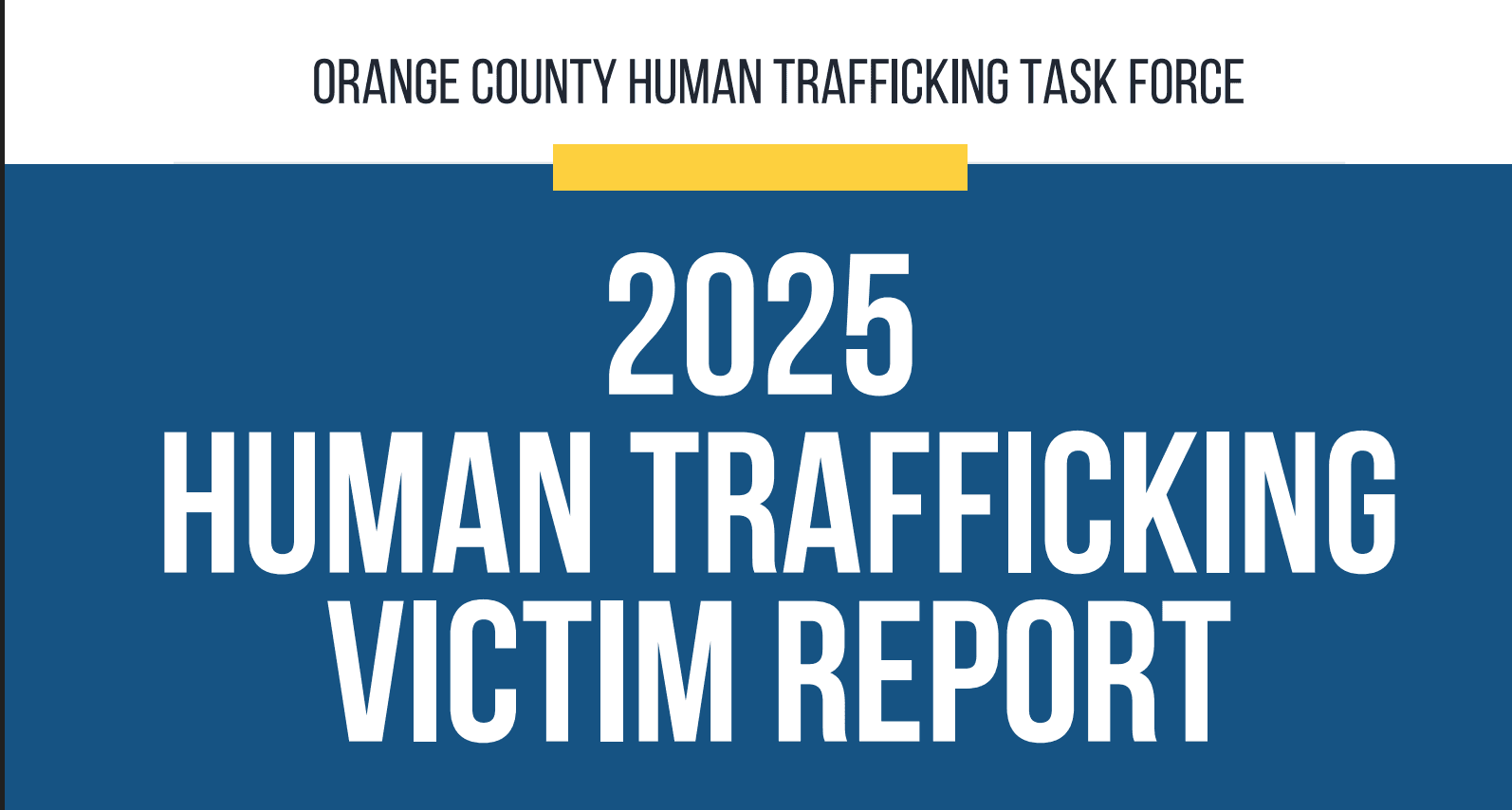
This Insights series is a close, respectful read of the 2025 Orange County Human Trafficking Task Force Report—not to second-guess the many agencies and community partners doing difficult work, but to spotlight what the report itself is telling us about where Orange County is building momentum, where gaps still exist, and what policy and procedure shifts could make the response stronger.
Orange County has built momentum worth naming
Before anything else: a lot is happening here. The Orange County Human Trafficking Task Force is documenting trends, coordinating partners, and—importantly—making room in its own reporting for survivor leadership, not just service numbers. That’s not small. It signals a shift from “awareness” toward actual field-building.
And it creates an opening to ask a practical question with respect, not blame:
How do we keep the people closest to the harm from having to “volunteer” their way through recovery and leadership?
The report’s quiet blueprint: survivor leadership as the next frontier
In the report’s Survivor-Led Partnerships section, it’s clear this isn’t a symbolic add-on. The section was created by a diverse group of 14 survivor leaders and subject matter experts advising the Task Force, and they identify four priorities for sustainable change: leadership spaces, joy and meaningful connection, policy and funding, and language matters. (OCHTTF 2025 Human Trafficking Victim Report – “Survivor-Led Partnerships,” p.15)
That framing matters: it treats survivor leadership as part of how systems become trustworthy—not just morally “inclusive.”
On the Leadership Spaces page, the report spells out why this helps: survivor-led mentorship can create a pathway that feels “safer and more trustworthy” when people are trying to reconnect with community support—and it names leadership as including training, policy, consulting, motivational speaking, and program development. (“Leadership Spaces,” p.16)
This is the key idea: trust is not a vibe. It’s built by people—and those people need paid roles.
My personal truth: I’ve seen how the field survives on underpaid labor
I’ve worked in the anti-trafficking world for over ten years. Sometimes that work was unpaid or underpaid. To stay in it, I had to piece together side hustles—paid work in clinical research, and at times rely on the support of professional mentors.
And I’m aware enough to say this plainly: my class status and certain privileges (including race and gender) made that survivable in ways it isn’t for many others.
For people closer to the margins, underpaid “mission work” isn’t romantic. It’s destabilizing. It can force impossible choices. And yes—sometimes people end up doing sex work to subsidize advocacy or activism because the system hasn’t built enough paid pathways for lived-experience leadership.
That isn’t a moral failure on anyone’s part. It’s a funding-and-infrastructure gap.
Where OC can build next (without pretending nothing exists)
The report’s Policy and Funding section recognizes something important: when legislation and funding move, it can make change feel real—bigger than a single story—and it also names how emotionally costly and discouraging policy spaces can be when survivor voices are dismissed. (“Policy and Funding,” p.20)
So here are a few practical directions OC can keep moving toward—framed as expansions of what’s already underway:
1) Pay survivor leadership as a standard line-item
Not “stipends when available,” but clear roles: mentor, outreach lead, trainer, program advisor, evaluator.
2) Fund mentorship as a trust-and-retention strategy
If mentorship helps people reconnect in ways that feel safer and more trustworthy, treat it as core programming—not optional. (“Leadership Spaces,” p.16)
3) Build procurement pathways that don’t exclude the most credible messengers
Many community-embedded groups have trust and access—but not always the administrative bandwidth big contracts demand. Capacity-building and multi-year funding can be the bridge.
4) Make “language matters” operational, not political
The report is unusually generous here: it acknowledges that terms vary by context, that people often mean well, and that confidentiality and dignity matter. It even offers practical language guidance. (“Language Matters,” p.21)
That can become a countywide communications standard for outreach and services: use the person’s name when possible, follow their preference, avoid shame language, and protect privacy.
A call to action
Orange County doesn’t need to “start caring.” It already does.
The opportunity now is to keep professionalizing the parts of the response that have historically been informal—especially survivor leadership—so the work isn’t carried on the backs of people who are still rebuilding their lives.
If we want survivor leadership to be real, it has to be sustainable.

Get Involved!
Have a question, a project idea, or a situation you’re trying to make sense of? Reach out. We’ll point you toward next steps—whether that’s training, consulting, collaboration, or the right support.